
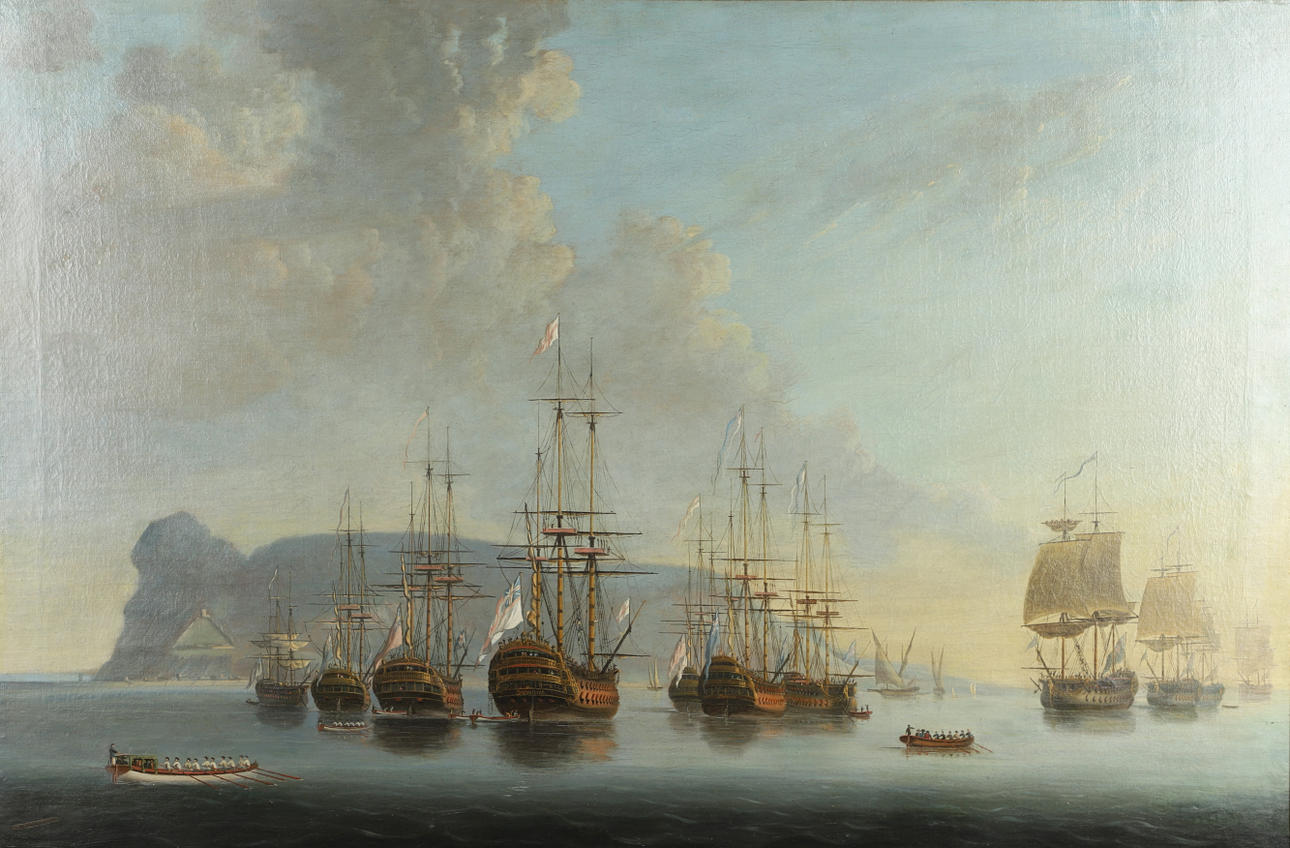
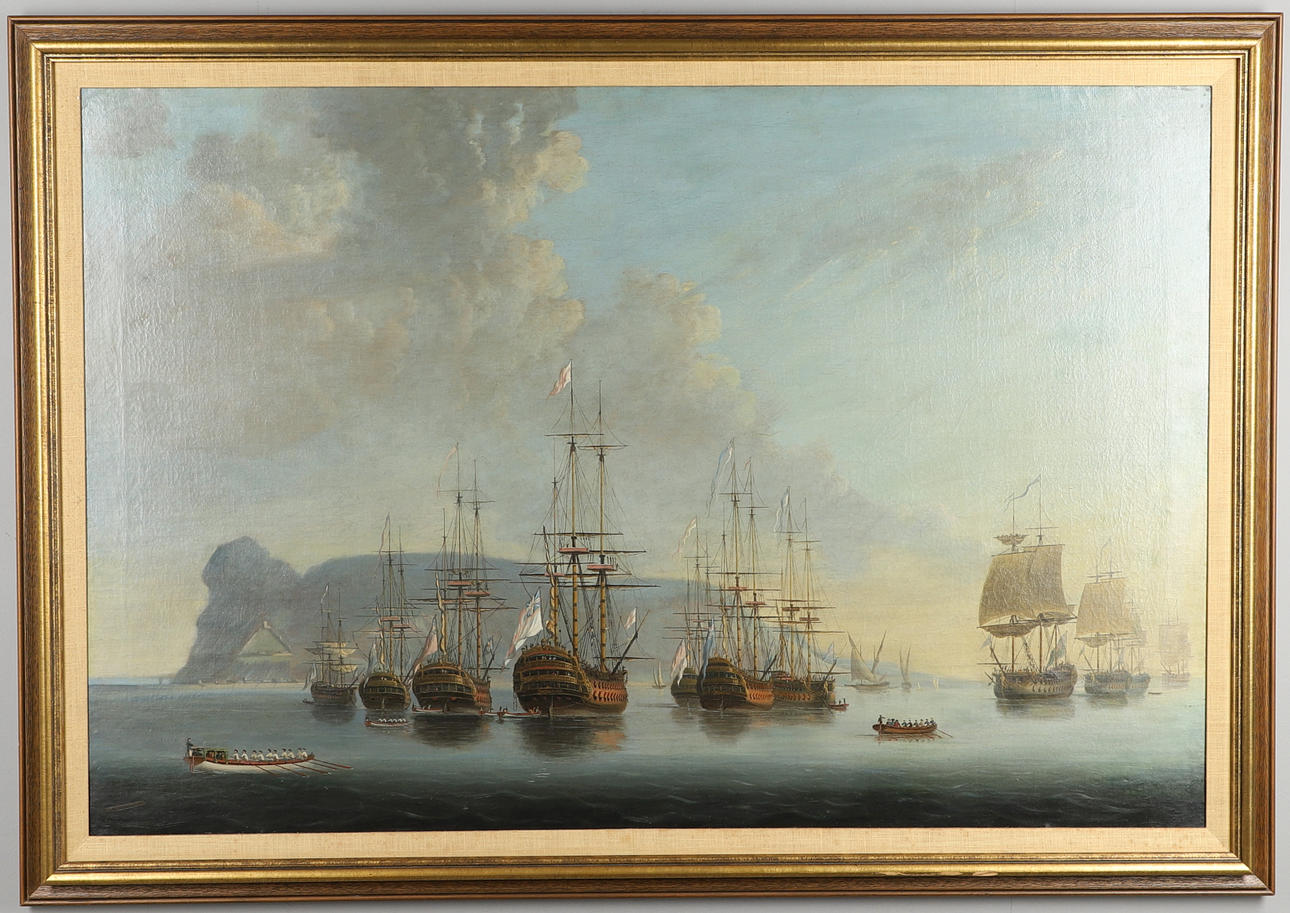
517. ADAM H. CALLANDER (1750-1817). THE SIEGE OF GIBRALTAR.
This auction is closed, but maybe you like the following items?
Images
Description
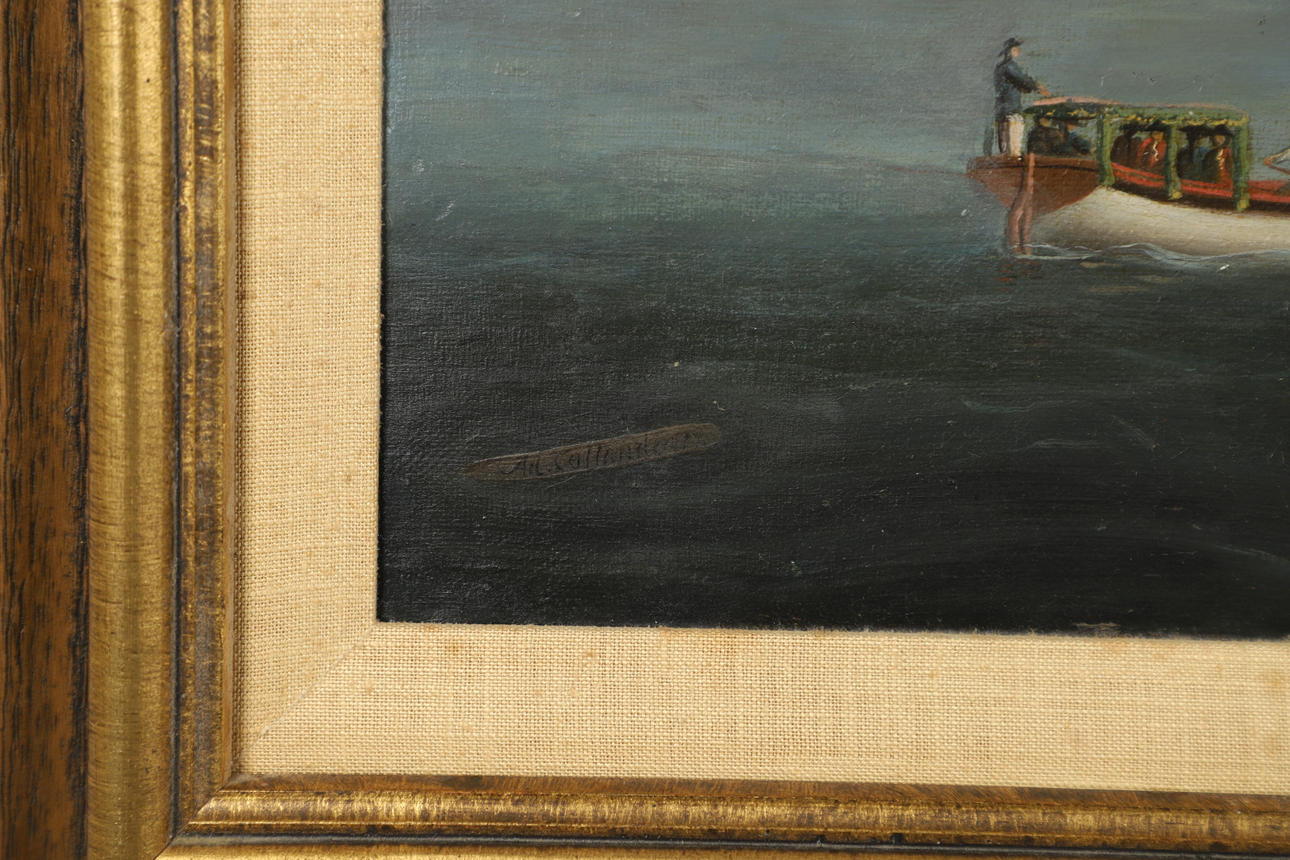
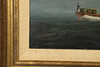
Signed and indistinctly dated on floating spar lower left, oil on canvas
80 x 120.5cm.
* This subject depicts the unsuccessful attempt by combined French and Spanish fleets to capture Gibraltar from the British during the War of the American Revolution. The assailants' vessels were assembled from June 1779 and the blockade lasted until February 1783. Admiral George Rodney (in 1780) and Admiral George Darby (in 1781) entered the blockade without retaliation from the occupiers and so the besiegers under Louis de Crillon gathered more vessels for a more concerted attack in September 1782. 60,000 men, 49 ships-of-the-line and 10 floating batteries were rebuffed by a mere 5000 British defenders. Following this humiliating defeat, Admiral Richard Howe slipped through the blockade in October 1782 and the siege was all but lifted by February 1783. Just over 330 British men were lost during the siege (which lasted for three years, seven months and twelve days) but 6000 French and Spanish lives were lost.
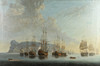
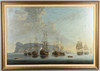
UPDATE: This depicts a scene from the period of the ‘Great Siege’ of Gibraltar. However, it does not show the large Franco-Spanish fleet lying off Gibraltar in order to blockade the Rock (to prevent any reinforcements and supplies coming in) and to protect the ten massive floating batteries which had been specially constructed to bombard the fortifications and thereby force the garrison to capitulate. This tranquil scene shows ships of a Royal Navy fleet anchored off Gibraltar, with barges and jolly boats plying between vessels taking captains and senior officers to call upon each other.
HMS Sandwich is clearly labelled and, as she was the flagship of Vice-Admiral Sir George Rodney (later Admiral Lord Rodney), it is safe to assume that this subject depicts Rodney’s fleet which effected the first ‘Relief of Gibraltar’ after it arrived on 25th January 1780 and the enemy withdrew. It had been sent specifically to deliver men and supplies. Whilst this task was successfully executed, once Rodney and his ships put back to sea, the Spaniards returned to the fray and the siege started all over again.
We are grateful to Michael Naxton for his help with the footnote for this picture.
Condition
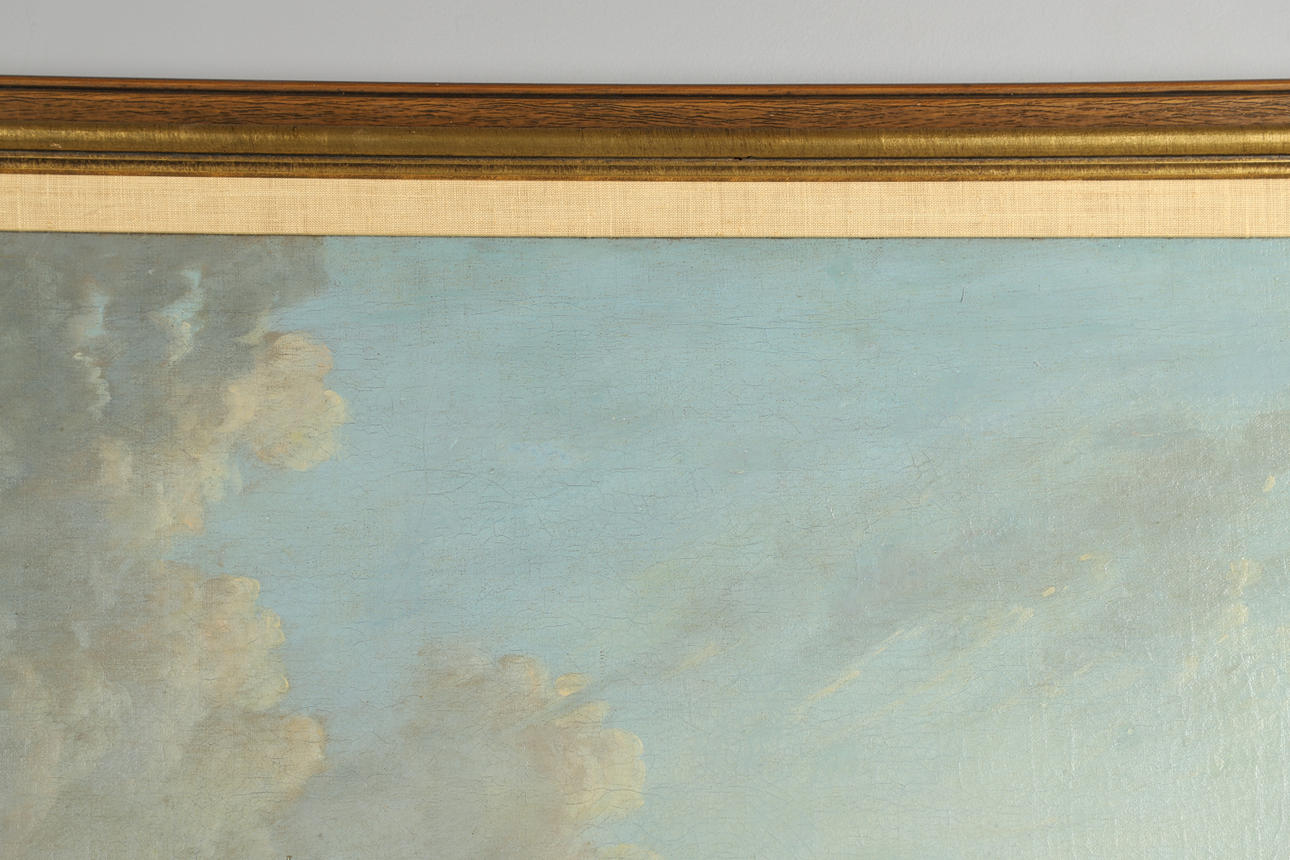
Lined; retouching throughout; some craquelure.
Resale right
Sale
Do you have something similar to sell? Get your items valued free of charge!
Bidding
Have your item valued free of charge.
Description
Signed and indistinctly dated on floating spar lower left, oil on canvas
80 x 120.5cm.
* This subject depicts the unsuccessful attempt by combined French and Spanish fleets to capture Gibraltar from the British during the War of the American Revolution. The assailants' vessels were assembled from June 1779 and the blockade lasted until February 1783. Admiral George Rodney (in 1780) and Admiral George Darby (in 1781) entered the blockade without retaliation from the occupiers and so the besiegers under Louis de Crillon gathered more vessels for a more concerted attack in September 1782. 60,000 men, 49 ships-of-the-line and 10 floating batteries were rebuffed by a mere 5000 British defenders. Following this humiliating defeat, Admiral Richard Howe slipped through the blockade in October 1782 and the siege was all but lifted by February 1783. Just over 330 British men were lost during the siege (which lasted for three years, seven months and twelve days) but 6000 French and Spanish lives were lost.
UPDATE: This depicts a scene from the period of the ‘Great Siege’ of Gibraltar. However, it does not show the large Franco-Spanish fleet lying off Gibraltar in order to blockade the Rock (to prevent any reinforcements and supplies coming in) and to protect the ten massive floating batteries which had been specially constructed to bombard the fortifications and thereby force the garrison to capitulate. This tranquil scene shows ships of a Royal Navy fleet anchored off Gibraltar, with barges and jolly boats plying between vessels taking captains and senior officers to call upon each other.
HMS Sandwich is clearly labelled and, as she was the flagship of Vice-Admiral Sir George Rodney (later Admiral Lord Rodney), it is safe to assume that this subject depicts Rodney’s fleet which effected the first ‘Relief of Gibraltar’ after it arrived on 25th January 1780 and the enemy withdrew. It had been sent specifically to deliver men and supplies. Whilst this task was successfully executed, once Rodney and his ships put back to sea, the Spaniards returned to the fray and the siege started all over again.
We are grateful to Michael Naxton for his help with the footnote for this picture.
Condition
Lined; retouching throughout; some craquelure.
Resale right
Sale
Do you have something similar to sell? Get your items valued free of charge!
Details
- Catalogue no
- 517

Autumn Fine Art Sales October 2023
Welcome to our Autumn Fine Art Auction to be sold across four days of auctions.
Tuesday 17th October - 10am
SILVER & VERTU
Wednesday 18th October - 10am
PICTURES, COLLECTORS, 19TH/20TH CENTURY DESIGN & CERAMICS
Thursday 19th October - 10am
JEWELLERY & WATCHES
Friday 20th October - 10am
FURNITURE, CLOCKS & RUGS